How Behavioral Therapy Helps with Impulse Control in Children
Understanding How Behavioral Therapy Enhances Children's Impulse Control


Your seven-year-old has just grabbed a fistful of his sister's cereal off her plate, eaten it standing up, and bolted into the living room. You have not finished your coffee. It is 7:15 AM on a Tuesday. The cereal incident is the third version of the same situation since Saturday, and you have already used the visual schedule, the countdown timer, the reward chart, and the marble jar. None of it has held for more than four days.
Impulse control is the skill that lives behind almost every "why did you just do that?" moment in a child's day. It shapes social interactions, classroom learning, sibling relationships, and the long ride home from the grocery store. Behavioral therapy, including Applied Behavior Analysis (ABA), gives families a structured way to build this skill, particularly for children with ADHD, autism, or other impulse-related conditions. The work is rarely fast, but the techniques are concrete, and most of them are things parents can practice in the moment.
The Role of Behavioral Therapy in Impulse Control
Behavioral therapy helps children develop better impulse control by teaching them to notice their impulses and choose a different response, using structured strategies that get rehearsed enough to become automatic. The core idea is simple: impulse control is a skill, not a virtue, and skills are built through practice with feedback.
One widely used method is Parent Management Training (PMT), where parents learn techniques to enforce consistent discipline, praise specific positive behaviors, and set clear expectations the child can actually meet. The consistency itself is most of the medicine. In our practice, the families who see the biggest changes are usually the ones who get the rules and the responses tight, not the ones who introduce the most clever new system.
Another approach is structured role-playing, which teaches children to pause, think, and choose an appropriate response in a low-stakes simulated situation before it has to happen in real life. Reward systems (praise, tokens, small tangible incentives) encourage children to practice patience and delayed gratification, which is the developmental skill underneath most impulse-control work.
Behavioral therapy also builds self-regulation through emotional awareness exercises, mindfulness techniques, and sensory tools that help children manage strong feelings before those feelings become actions. Tools that come up most often include feeling check-ins, breath counting, and sensory objects (a smooth stone in a pocket, for example) that give the child something to do with their hands while they wait out the urge.
Used together, these strategies help children control impulsive behaviors, which in turn improves social interactions, academic performance, and emotional health. The techniques are practical and evidence-based, and the long-term self-control they build tends to generalize across settings.
Effective Techniques in Behavioral Therapy for Impulse Control
Behavioral therapy uses a set of engaging, structured activities designed to help children build impulse control without making the work feel like work. The activities teach patience, increase self-awareness, and reinforce more appropriate responses.
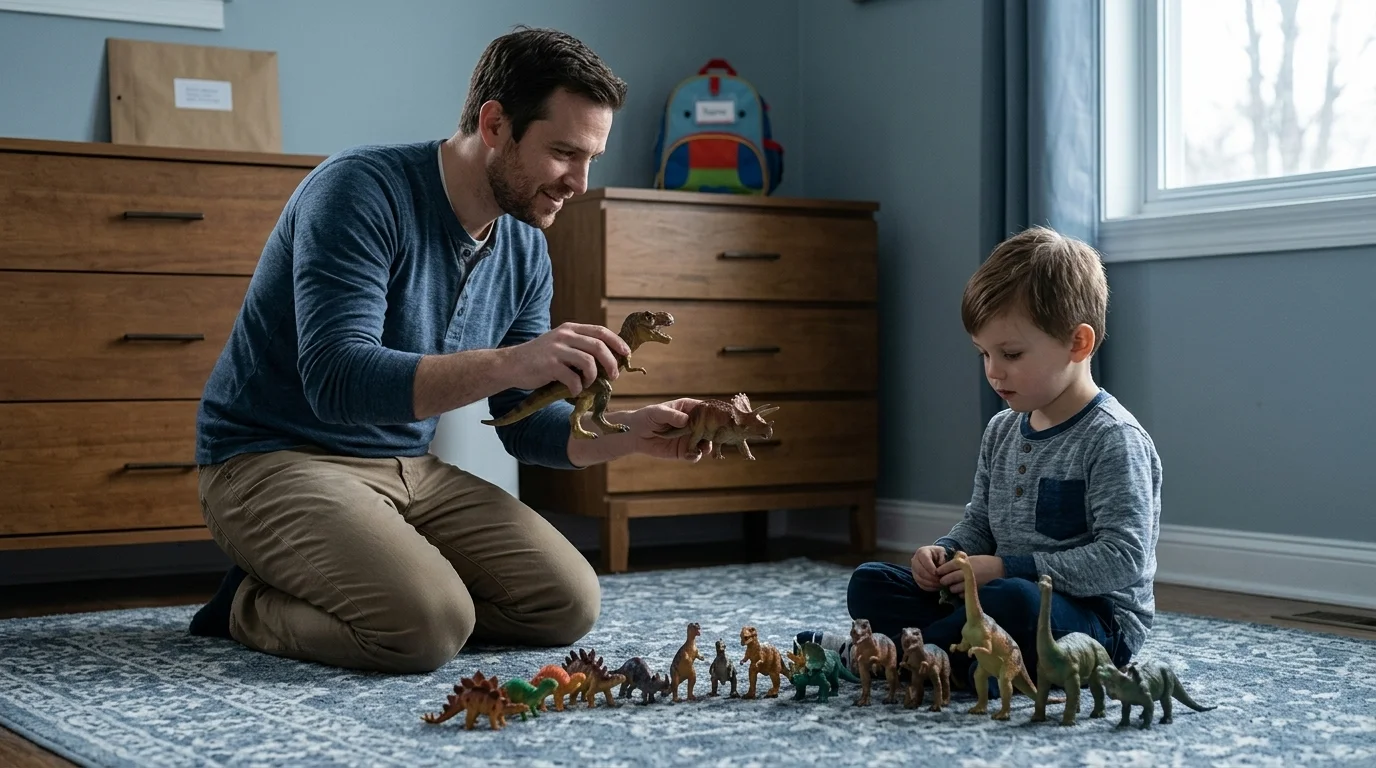
A common starting point is games that bake in the wait. "Freeze and Focus," "Simon Says," and "The Waiting Game" all require children to hold a response until the right cue. These look like games to the child and like reps to the BCBA. The win in "Simon Says" is that the child only acts when the cue is correct, which is the same skill that keeps them from blurting out an answer in class.
Role-playing real social scenarios is another technique we lean on heavily. Practicing what to do when someone takes a toy, when the answer to a question is "no," or when the line at the water fountain is too long lets children rehearse an alternative response in advance. The rehearsal makes the alternative response available when the actual moment arrives.
Sensory and calming activities round out the toolkit. Sensory objects, mindfulness routines, and slow-motion exercises help children manage their impulses in the high-arousal moments that usually break down. Occupational therapy, speech therapy, and ABA each contribute targeted exercises that build problem-solving, emotional understanding, and self-regulation in parallel.
Combining play-based activities, mindfulness, social skills training, and sensory strategies creates a comprehensive approach. Most kids on our caseload respond better to this kind of layered work than to a single intervention, because impulse control draws on several systems at once.
ABA Therapy's Role in Enhancing Impulse Control
ABA therapy has demonstrated meaningful effectiveness in helping children improve impulse control. The approach emphasizes specific strategies that strengthen emotional regulation and behavior management, especially in the harder moments that families say they cannot get through.
ABA programs are built around individualized treatment plans with clear, measurable objectives. The plans focus on reducing problematic behaviors such as impulsivity and aggression by reinforcing the alternative behaviors we want to see, and by teaching new skills that fill in what the impulsive behavior was previously accomplishing. Our BCBAs typically start with a functional behavior assessment to understand what the impulse is getting the child (attention, escape from a hard task, a desired item) before designing the plan. Without that step, plans tend to look reasonable on paper and fall apart on day three.
Research consistently supports ABA techniques for building self-regulation. Children tend to show fewer impulsive or aggressive behaviors over time, alongside more adaptive responses in the situations that used to derail them. The methodology is especially well-suited for children with developmental conditions like Autism Spectrum Disorder (ASD), where impulsivity often shows up alongside communication and sensory differences. Implementation by licensed behavior analysts keeps the work scientifically grounded and individualized.
For families seeing impulsive behavior take over the day, our behavior support team builds plans that target the function of the behavior, not just the surface. Within that work, the impact of positive reinforcement on long-term behavior change is one of the foundational principles we use to make impulse-control gains stick beyond the first few weeks.
Cognitive Behavioral Therapy (CBT) and Impulsivity
Cognitive Behavioral Therapy (CBT) plays a meaningful role in helping older children and adolescents manage impulsive actions. It works by identifying the thoughts and feelings that trigger impulsivity, then giving the child language and strategies to interrupt the chain before it ends in a behavior.
CBT techniques often include structured exercises that teach a child to pause and think before acting. One widely used model is "Stop-Think-Plan-Do," which slows the response loop down enough to insert a choice. Children also learn to identify the body-level cues (a hot face, a tight chest) that often precede an impulsive move.
In addition, psychoeducation about impulsivity, including the role of attention systems and neurological factors, helps build self-awareness. Children learn to monitor their impulses and recognize emotional triggers that lead to impulsive behaviors. The understanding alone often reduces frequency, because the child stops feeling like the behavior is happening to them.
Mindfulness exercises and self-control training are embedded within CBT to strengthen emotional regulation. Techniques such as controlling temper, depersonalizing difficult situations, and reframing challenges support impulse management. Therapists often use worksheets and activities that promote self-observation and reinforcement of the new behaviors. Behavior management strategies, including stimulus control and stimulus-response planning, help solidify habits of self-regulation.
Overall, CBT gives children a working toolkit for recognizing impulsive tendencies, developing coping skills, and gradually improving their ability to regulate impulses. The outcome is better decision-making and stronger social interactions over time.
Supporting Children with Impulse Control Challenges
Parents are the most consistent variable in any impulse-control plan, which is both the pressure and the leverage. The strategies below are the ones our parent training coaches walk families through most often, because they hold up in real homes, not just in clinic.
Set clear expectations, then make them concrete. A child cannot follow a rule they cannot picture. "Be good at the store" is unenforceable. "Hands on the cart, ask before you grab" is specific enough that you and the child agree on what success looks like.
Provide guidance at the moment of performance. Immediate, consistent consequences (both reinforcing and corrective) help children connect their actions with outcomes. The closer the response is to the behavior, the faster the learning. A reward earned three hours later is roughly noise to most kids under ten.
Use tangible reinforcement systems where helpful. A marble jar (one marble for a specified positive behavior, with a small reward when the jar is full) is the classic example. Token economies work for the same reason. The structure makes invisible progress visible, which is reinforcing in itself.
Model the regulation you want to see. Children mirror what they see far more reliably than what they are told. Parents who narrate their own pause ("I'm going to take a breath before I answer that") teach the pause faster than any worksheet does.
Use visual reminders and private signals. A hand on the shoulder, a discreet thumbs-up, or a card on the desk gives the child a redirect without public correction, which is what keeps the relationship intact while the behavior changes.
Build predictable routines. Most impulsive moments happen at transitions: morning to school, school to dinner, dinner to bedtime. Tightening transitions is one of the highest-yield interventions in this work.
Psychoeducation matters here too. Empowering parents and caregivers with accurate information about ADHD, autism-related impulsivity, and emotional regulation has been shown to moderately improve children's hyperactivity and impulsiveness. Many families find that learning the "why" behind their child's behavior changes how they respond to it, which then changes the behavior.
In the classroom, the same logic applies. Explicit rule-setting, checklists, role-playing, sensory exercises, and calming tools help children develop impulse regulation skills in the setting where most of the friction lives. Teachers who use private signals and short, specific praise tend to get more out of these strategies than teachers who rely on broader, public correction.
For families who want more structured support in applying these strategies consistently across home, school, and community, our parent training program teaches caregivers how to make these techniques work in their actual house with their actual child, not in the abstract. The other lever worth knowing is positive behavioral interventions and supports (PBIS), which is the framework many schools use and which pairs naturally with home-based behavior planning.
Integrating Behavioral Therapy into Treatment Plans
Combining different types of interventions, such as psychoeducation, school-based programs, reinforcement strategies, and neurofeedback, creates a comprehensive approach known as multimodal treatment. This method often produces better results than single-intervention care alone, because it targets several aspects of impulsivity at once. No single intervention can fully address hyperactivity and impulsivity for most children, but layered strategies meaningfully strengthen self-regulation across settings.
What role does family involvement play in behavioral therapy?
Family participation is one of the highest-leverage variables in successfully managing impulsivity and hyperactivity. Parents support their children by establishing consistent routines, setting clear expectations, and modeling calm behavior. Techniques like Parent Management Training (PMT) equip parents with skills to reinforce positive behaviors through specific praise and predictable consequences. When the home is running the same playbook as the therapy team, results compound. When it is not, they do not.
How do targeted behavioral strategies support children?
Behavioral interventions such as a school's Daily Report Card and home reward systems reinforce the behaviors we want to see more of. These strategies teach children to develop self-control by following rules, managing frustration, and delaying gratification. Visual reminders and private signals serve as cues that keep the child focused without singling them out. Counselors and BCBAs also lean on emotional awareness exercises, mindfulness practices, and sensory tools to help children recognize and slow their impulses. Play therapy, behavioral sequencing, and structured activities like games and role-playing teach children how to recognize their thoughts and feelings and route around the impulsive response.
Why is a combination of interventions more effective?
A variety of approaches addresses the complex nature of impulsivity and hyperactivity. Therapy combined with medication, lifestyle adjustments, and educational support often produces synergistic effects in helping children improve self-regulation. The goal is to create an environment that supports learning and emotional growth from multiple angles, so the child has more than one path to the right response in any given moment. Impulsivity often stems from developmental factors such as a still-maturing prefrontal cortex, and it can also be linked to underlying issues like trauma, ADHD, or oppositional defiant disorder (ODD). Recognizing those layers is what allows for a thorough assessment and an intervention that actually fits.
| Intervention Type | Main Focus | Additional Details |
| Multimodal Treatment | Broad, comprehensive management | Combines psychoeducation, neurofeedback, school interventions |
| Family Involvement | Support at home and structure | Parent training, consistent routines |
| Behavioral Strategies | Reinforcement and routine building | Reward charts, clear rules, visual cues |
| School-based Interventions | Academic and behavioral support | Daily Report Cards, classroom rules |
| Therapy Approaches | Emotional regulation and skills | CBT, play therapy, social skills training |
Implementing these strategies together helps children develop better impulse control, which leads to improved behavior and stronger relationships across the settings that matter most.
The Neuroscience Behind Impulse Control Issues
Impulse control in children is closely tied to the maturity of the prefrontal cortex, the brain region responsible for decision-making, emotional regulation, and impulse management. In children, this region is still developing, which is why impulsivity is so common at younger ages. As children grow, the prefrontal cortex matures, gradually improving their ability to delay gratification, plan ahead, and inhibit responses.
Biological factors
Beyond developmental timing, biological factors also influence impulse control. Imbalances in brain chemistry, particularly involving dopamine (a neurotransmitter linked to reward and motivation), play a role. Disruptions in dopamine pathways can impair the brain's ability to regulate impulses, which contributes to the patterns seen in conditions like ADHD and impulse control disorders.
Understanding the underlying neuroscience helps tailor effective interventions. Therapies like CBT aim to strengthen the prefrontal cortex's functioning and improve impulse regulation through repeated practice. Medications, when used, can support self-regulation by adjusting the chemistry, often making behavioral interventions more accessible to a child who otherwise cannot get a foothold on the strategies.
| Brain Region | Function | Impact on Impulsivity |
| Prefrontal Cortex | Decision-making, emotional regulation, impulse control | Immature development can result in difficulty managing impulses |
| Dopamine Pathways | Reward processing and motivation | Imbalances can lead to reduced impulse control |
By understanding these biological factors, parents, clinicians, and educators can implement strategies that support brain development and better manage impulsivity. This usually combines behavioral therapy, medication (when appropriate), and supportive routines that scaffold healthier brain-based regulation over time.
Long-term Benefits of Behavioral Therapy in Impulse Regulation
Behavioral therapy, including Parent Management Training (PMT), Multisystemic Therapy (MST), and CBT, is designed to teach children skills they keep. The interventions focus on building self-control, emotional awareness, and problem-solving, which are skills that compound with practice.
Research shows that many children experience lasting positive changes. They learn to regulate their impulses more effectively, which usually translates to fewer conflicts, reduced tantrums, better peer relationships, and smoother daily routines. The third week of consistent behavioral plan implementation is often the hardest, and data-wise, this is also when the first real shifts tend to appear, which is why we coach families to stay the course through that window.
These improvements often become part of daily habits, making long-term behavioral stability more achievable. Children begin waiting their turn, controlling anger, and following routines without needing the prompts that used to drive every step.
Can behavioral therapy improve emotional health?
Yes. As children learn to recognize and understand their emotions, they develop healthier ways to cope with stress and frustration. This emotional growth tends to decrease anxiety, depressive symptoms, and the likelihood of engaging in impulsive or risky actions.
By strengthening emotional regulation, children often gain confidence and resilience. The mindfulness and relaxation techniques they pick up help manage overwhelming feelings, which over time fosters a more positive self-image. The cycle reinforces itself: better regulation produces fewer negative consequences, which builds the belief that self-control is possible, which then makes self-control easier.
In short, behavioral therapy modifies problematic behaviors and supports emotional health at the same time, which is what makes the developmental trajectory more adaptive overall.
Conclusion
Behavioral therapy is one of the most reliable tools for addressing impulse control challenges in children. Through evidence-based techniques (structured activities, positive reinforcement, multimodal therapy programs) behavioral interventions help children build the regulation skills they need across home, school, and community settings. With committed involvement from parents and caregivers, and with professional guidance that matches the plan to the child, kids can see meaningful gains in self-control. The downstream effect is stronger academic performance, healthier social interactions, and steadier emotional development. Done well, this work does not just address today's outbursts. It sets a foundation for long-term behavioral and emotional health.
Why Mastermind Behavior
Mastermind Behavior is a BCBA-owned and operated in-home ABA therapy provider serving families across New Jersey, Georgia, and North Carolina. Our BCBAs design the impulse-control plan based on a functional assessment of what each behavior is actually doing for your child, our Behavior Technicians run the day-to-day reinforcement work in the rooms where the impulses fire (the kitchen, the homework table, the hallway after school), and our parent training coaches help you carry the plan forward in the moments we are not there. With impulsivity, the work is mostly about reps in real time, which is why in-home delivery matters: the therapy happens at the table where the cereal got grabbed, not in a clinic two miles away. With a 90 percent staff retention rate and no onboarding waitlist, most families begin direct services within six weeks of their initial assessment.
If you are watching the same impulsive pattern play out again this week and the strategies you have tried are not holding, schedule a free consultation or call us at 732.813.7333. We will listen to what the behavior actually looks like in your house, what you have already tried, and what you think your child might be getting out of it, then help you figure out a workable next step with no pressure to commit.
References
- Psychological Treatments for Hyperactivity and Impulsivity in Children (PMC)
- Impulse Control Disorders: Symptoms and Treatment (Cleveland Clinic)
- Behavioral Treatments for Kids With ADHD (Child Mind Institute)
- Cognitive and Behavioral Training Interventions to Promote Self-Control (PMC)
- Taming Impulses (American Counseling Association)
- Impulse Control and ADHD: Teaching Good Behavior (ADDitude)